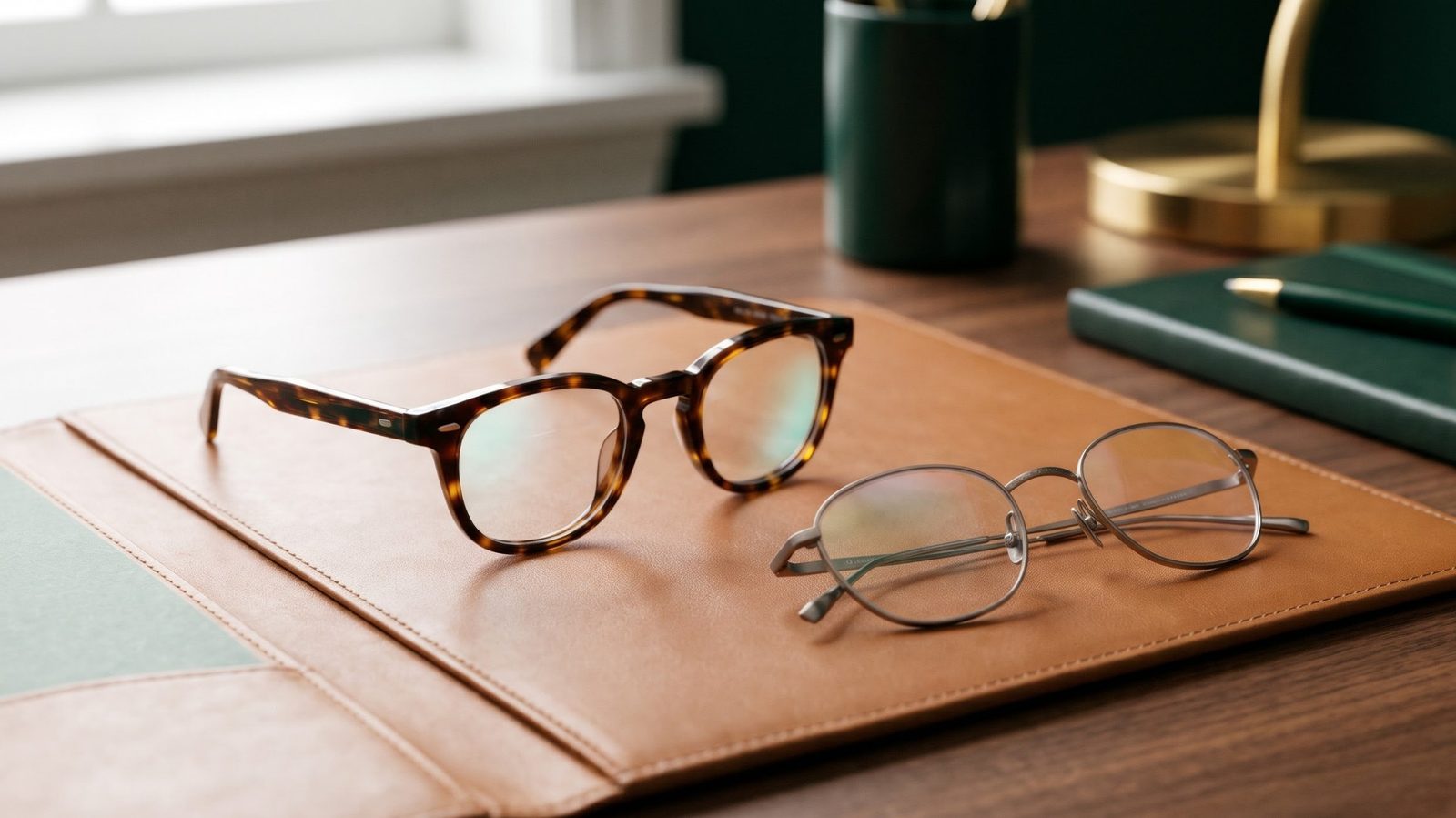
Glasses are unusual among the things we buy: people look at them every time they look at you. A good pair adds to your presence. A poor one distracts from it. Choosing well does not take long if you know what to look for.
Choose a shape that contrasts with your face
A simple idea works well: pick frames that balance your features rather than copy them. Round faces often suit frames with straighter lines. Square or angular faces are often softened by rounder frames. If you are unsure, try three different shapes in the shop and look at all three before deciding.
Fit matters more than style
A pair that fits looks better than a fashionable pair that does not.
- Width: the frame should be about as wide as your face, not wider.
- Eyes: your eyes should sit near the middle of each lens.
- Bridge: it should rest comfortably on your nose without sliding down.
- Temples: the arms should hold gently behind your ears without pressing.
Shake your head lightly in the shop. If the frames move, ask for an adjustment.
Know the materials
- Acetate: a plastic with deep, rich colours. Good for bold or classic styles.
- Titanium: light and strong. Good for thin, quiet frames you will wear all day.
- Steel and other metals: often slim and affordable, with many shapes.
Pick a colour that is easy to live with
Black, dark tortoiseshell, navy and grey go with nearly everything and look serious in meetings. Brighter colours can be wonderful, but test them in daylight before you buy.
Think about your lenses
An anti-reflective coating cuts glare, which helps on video calls, on screens and when driving at night. Blue-light filters are often sold as a cure for tired eyes, but the evidence for them is weak, so treat them as optional and ask your optician for an honest view.
Consider two pairs
Many people are happy with one pair for work and a second for the weekend or travel. It also gives you a spare when one breaks.
Keep your eyes checked
A good frame is wasted on an old prescription. Have your eyes tested as often as your optometrist advises, and update your lenses when needed.
The best glasses are the ones people notice for how well you look in them, and not for the frames.